
Tooth fillings that repair damage before it reaches the nerve.
We check decay depth, old filling leakage, cracks, and bite pressure before rebuilding the tooth with a natural-looking restoration.

First visit focus
A filling should seal the problem, not just cover it.
The tooth must be cleaned, bonded, shaped, and bite-checked so it feels natural and protects what remains.
Main goal
Seal and rebuild
Best for
Small to medium damage
Material
Tooth-colored composite
Final check
Bite and floss contact
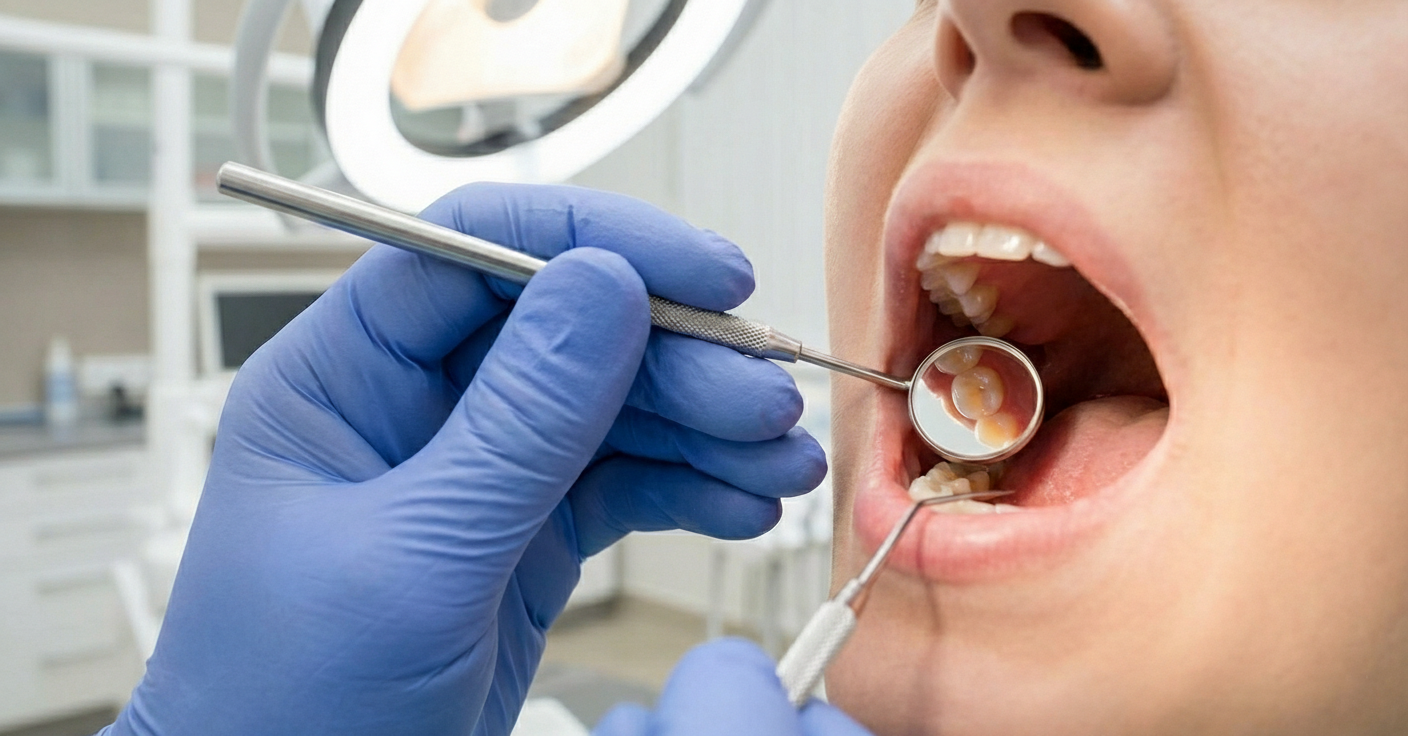
First, we measure the damage
A filling is small dentistry that protects a much bigger tooth.
The goal is to remove decay or failing material, preserve healthy tooth structure, and rebuild the tooth so it seals, chews, and cleans properly.
Find
Depth and cause
Repair
Seal and shape
Check
Bite and contact
Cavity basics
A cavity is not just a hole. It is a breakdown process.
Decay, cracks, old fillings, and bite pressure all change the repair plan. We check the cause before choosing the restoration.
Enamel damage
Early decay starts in the outer enamel. It may look like a white, brown, or dark spot before it becomes painful.
Dentin sensitivity
Once decay reaches dentin, cold, sweet foods, or brushing can trigger sensitivity because dentin is closer to the nerve.
Leaking old fillings
A filling can chip, shrink, crack, or leak at the edge. Bacteria may enter underneath even if the tooth looks mostly normal.
Nerve risk
Deep decay near the pulp may need a different plan. A filling only works when the nerve is still healthy enough.
Is a filling enough?
The right repair depends on how much tooth is left.
A filling is conservative, but it should not be used when the remaining tooth needs stronger protection.
A filling is usually suitable when
Decay is small or moderate
Enough healthy tooth remains
Pain does not linger strongly after cold
The tooth is not deeply cracked
We may suggest another option when
The cavity is very deep near the nerve
The tooth wall is too weak
A crack runs under the gum
A crown, onlay, or root canal assessment is safer
Your care pathway
A calm repair from diagnosis to final bite check.
Diagnose
We check the cavity, old filling, crack, or chipped area and use X-rays when hidden depth needs confirmation.
Protect
The tooth is isolated and numbed when needed so the repair stays clean, controlled, and comfortable.
Remove and seal
Decay or failing material is removed, then the tooth is bonded with tooth-colored composite.
Shape and polish
We refine the contact, bite, contour, and polish so the filling feels smooth and natural.
Treatment choices
Sometimes the best filling is knowing when not to place one.
We explain whether a filling is enough or whether the tooth needs a stronger or deeper treatment plan.
Composite filling
Best for many small and medium repairs. It bonds to tooth structure and can be shade-matched.
Replacement filling
Used when an old filling is leaking, chipped, rough, stained, or trapping decay at the edge.
Onlay or crown
Considered when a filling would be too large to protect the remaining tooth walls.
Root canal assessment
Needed if pain lingers, infection is suspected, or decay has reached the nerve space.
When to act
Do not wait for a small repair to become a bigger one.
Tooth decay and filling failure often start quietly. These signs are worth checking before pain becomes constant.
Sweet sensitivity
Food catching between teeth
A rough or chipped filling edge
Dark line around an old filling
Cold sensitivity that is getting worse
Pain when biting
A visible hole or dark spot
Floss tearing in one area
Timing and risk
Earlier repair usually means more tooth can be preserved.
Waiting can turn a simple filling into a crown, root canal, or extraction discussion.
Small cavities can grow
Once decay gets through enamel, it can spread more quickly through dentin.
Weak walls can crack
A large cavity or failing filling can leave thin tooth edges that fracture under chewing.
Nerve symptoms can start
Lingering cold pain, night pain, or swelling may mean the tooth needs more than a filling.
Aftercare is mostly about bite, cleaning, and patience.
A new filling should feel smooth and natural. If your bite feels high, it is better to adjust it early.
Avoid chewing until numbness fully wears off.
Tell us if the bite feels high or uneven after the filling.
Expect mild short-term sensitivity if the cavity was deep.
Floss carefully around the new contact point.
Avoid biting hard objects with newly restored edges.
Keep routine check-ups so old fillings can be monitored.
Common misunderstandings
Fillings are simple, but the decision still matters.
These are the points patients often misunderstand before treatment.
Myth: no pain means no cavity
Many cavities are painless until they get close to the nerve. A check-up can find them earlier.
Myth: every dark mark needs drilling
Some stains or early enamel changes can be monitored. We check whether the area is active decay.
Myth: a filling is always enough
If too much tooth is missing or the nerve is involved, a filling may not protect the tooth properly.
What affects filling cost?
Filling cost depends on cavity size, depth, tooth position, number of surfaces, and whether the tooth needs stronger protection.
The goal is the smallest reliable repair.
We explain whether a filling is sensible, what material is being used, and what would make the tooth need another option.
Check My ToothQuestions
Before your filling
Book your filling consultation
Find out if your tooth needs a simple repair.
Tell us what you feel or what was found at your check-up. We will explain the diagnosis, options, and pricing before treatment.