
Digital Dental Imaging
Complete guide to panoramic imaging.
Everything a patient usually needs before deciding: what it is, when it helps, how we plan it, what the procedure involves, and how to care for the result.
Covers
Suitability
Explains
Procedure
Includes
Aftercare
First, we capture what eyes cannot see
Imaging turns hidden anatomy into a visible plan.
Panoramic and 3D imaging help evaluate roots, bone, impacted teeth, sinuses, joints, infection, and implant sites.
Knowing the anatomy in advance reduces uncertainty and helps dentists plan with more confidence.
A scan can reveal root position, bone changes, impacted teeth, and infection patterns before treatment begins.
Different images answer different questions. We choose the smallest useful scan for the decision being made.
A scan can prevent guesswork before treatment starts.
Good fit or not?
Imaging is useful when the answer is hidden below the surface.
We use the consultation to confirm whether panoramic imaging is the right route, or whether another step should happen first.
Usually suitable when
You are planning implants, wisdom teeth, orthodontics, or complex treatment.
Pain has not been explained by a visual exam.
A dentist needs to assess roots, bone, sinuses, or impacted teeth.
You need records for a second opinion or travel treatment plan.
We may treat something first when
We only take scans when there is a diagnostic reason.
Tell us before imaging if you are pregnant or may be pregnant.
A small dental X-ray may be enough for simple single-tooth questions.
Full procedure
What happens step by step
Start with the real concern
We choose imaging based on the question we need to answer, whether it is wisdom teeth, implants, infection, orthodontics, or unexplained pain.
Indication
We confirm why the scan is needed and what question it should answer.
Capture
The image is taken quickly with positioning guidance from the team.
Review
Your dentist explains findings in plain language.
Scan
A quick, comfortable 15-second scan while you stand.
Reconstruction
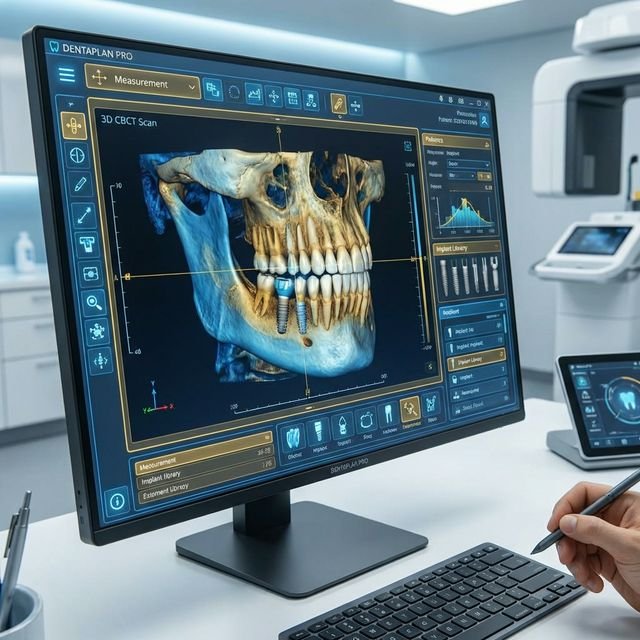
Our software builds a 3D model of your entire oral structure.
Review
Your doctor walks you through the findings on a large HD screen.
Aftercare and maintenance
We give you instructions specific to panoramic imaging so you know what to expect after treatment.
Treatment choices
Which scan may be used
Different images answer different questions. We choose the smallest useful scan for the decision being made.
Option 01
Panoramic X-ray
Shows the full jaw, teeth, roots, and wisdom teeth in one broad image.
Option 02
CBCT 3D scan
Used when depth, nerve position, bone width, or implant planning needs detail.
Option 03
Implant measurements
Bone height, width, and anatomy are reviewed before surgical planning.
Option 04
Referral report
Findings can be shared when another clinician needs the records.
Aftercare
How to protect the result
No recovery time is needed after imaging.
Bring previous scans if you have them.
Ask which findings affect your treatment plan.
Keep digital records for future comparison.
Follow the next-step recommendation based on the scan.
Tell us if you are pregnant or may be pregnant before imaging.
Cost factors
Imaging cost depends on whether panoramic X-ray, CBCT, report, measurements, or treatment planning support is needed.
Questions to ask before you decide
Is panoramic imaging the right treatment for my main concern?
What needs to be treated first for health or stability?
What result is realistic for my teeth, gums, bite, and timeline?
What maintenance will I need after treatment?
FAQs
Common questions about panoramic imaging
Ready for a clear answer?
Book your panoramic imaging consultation.
Bring your questions. We will explain what applies to your mouth, what can wait, and what should be handled first.
Back to Main Page